The bird detectives: APSU Middle College students turn curiosity into impact
By: Colby Wilson December 11, 2025
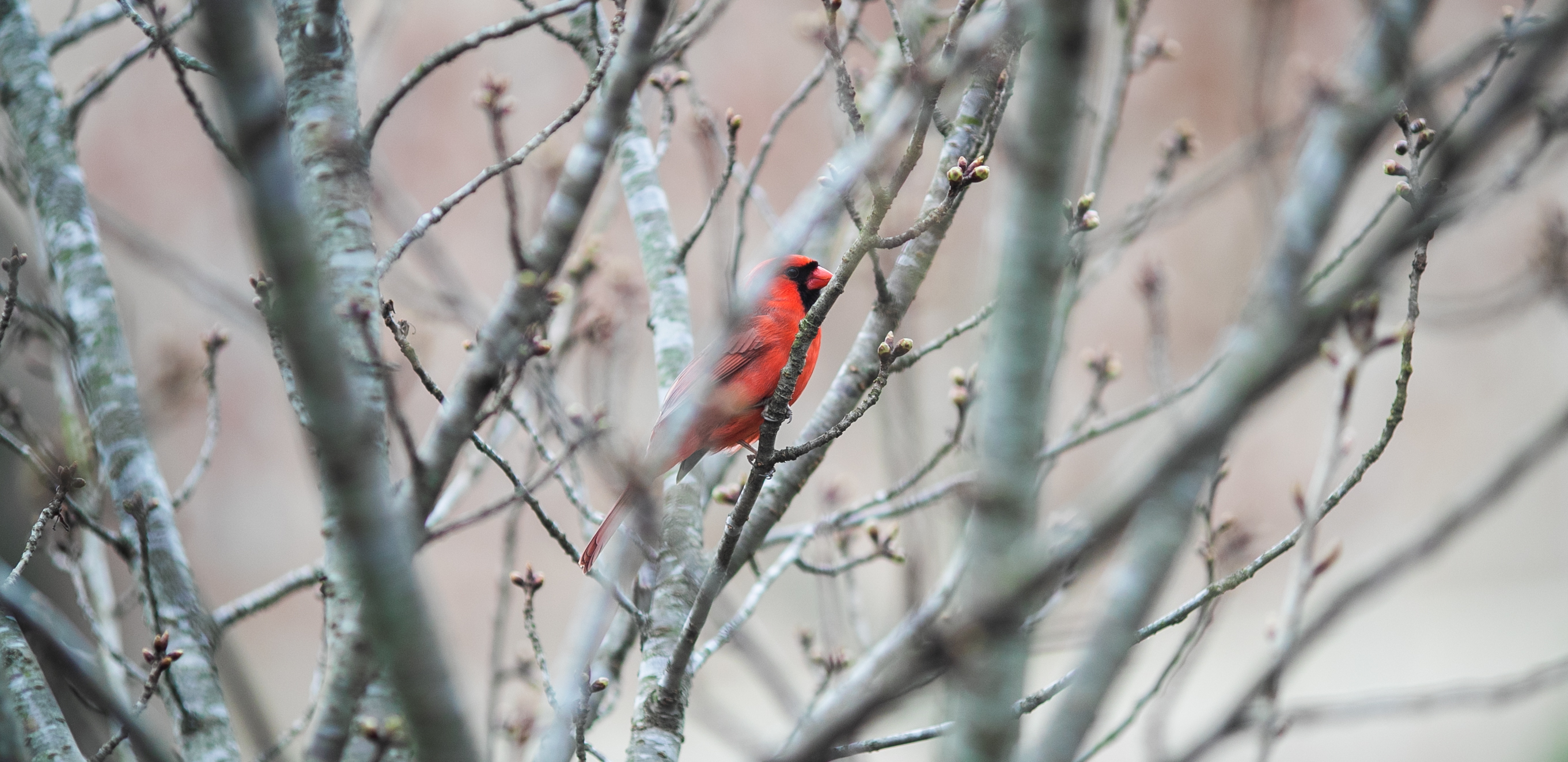
Austin Peay State University is working to protect the birds on its campus, like this cardinal, from fatal collisions with windows through a conservation effort that has grown to include Middle College students. | Photo by Taylor Slifko
CLARKSVILLE, Tenn. 鈥� When student Devlin Wescott first connected with Dr. Stefan Woltmann through the Partners Engaged with Emerging Researchers (PEER) program, he had no idea that he would soon help lead a campus-wide conservation effort to potentially save hundreds of birds' lives.
What started as an individual research project has come to include the Bird Alliance, a group of Middle College students who spend their mornings walking campus, documenting bird strikes, and contributing to 奥辞濒迟尘补苍苍鈥檚 decade-long research initiative that has already proven successful in preventing bird deaths.
鈥泪 was just looking for a professor I could work with,鈥� Wescott said. 鈥泪 want to be a wildlife biologist in the future; I was big on wildlife, but not specifically birds. And now it鈥檚 snowballed into bringing in more people to the group and allowed me to meet a lot of new people and opened up a lot of different opportunities for me.鈥�
The students monitor 11 buildings, mostly on the east side of campus, at least three times per week, documenting both bird strikes and鈥攊mportantly鈥攄ates when no strikes occur.
Their systematic approach is building on 奥辞濒迟尘补苍苍鈥檚 long-term research at the Sundquist Science Complex (SSC), which provided the foundation for the 蝉迟耻诲别苍迟蝉鈥� success. A few years ago, Woltmann read a study estimating that more than 600 million birds die yearly from window strikes in the United States. After identifying problematic windows in the SSC through years of careful monitoring, the university applied vinyl treatments in March 2023 that have reduced bird deaths from dozens annually to a total of two since their installation.
Woltmann said the vinyl is identical to that used on city buses, which allows people in the building to see outside while making the glass visible to birds.
The project expanded under the guidance of Brandy Schnettler, the PEER faculty advisor and teacher at APSU鈥檚 Middle College, who formed the APSU Bird Alliance to capture 蝉迟耻诲别苍迟蝉鈥� growing interest in conservation work. The group includes high school students with diverse career aspirations鈥攆rom architecture and veterinary medicine to wildlife biology鈥攗nited by a common interest in making a difference.
鈥淲e just ended up pulling more and more people into the group as time went on,鈥� Schnettler said. 鈥淧eople would just see us out and ask what we were doing and wanted to be part of it. And so it just wound up evolving as the semester went on.鈥�
The growing effort resonated with students like senior Skie Griest, who was eager to explore the environmental side of architectural design.
"I have plans to go into the architecture field, so I thought it was important to know how certain setups affect the environment," said Griest, who discovered through the project that she wants to continue this work at her future university. "And I just like birds."
Bee Dennis also followed her interest in birds when joining the group and found unexpected fulfillment in the research process. She said the work has allowed her to make an impact that extends beyond resume-building.
Woltmann stressed that meaningful research requires patience and persistence鈥攍essons that are particularly valuable in a time when people are increasingly accustomed to instant results. His 10 years of data from a single building provided the foundation needed to identify problems and test solutions.
"The only way that I can say where the problems are is that I'm stubborn enough to keep looking and keep doing this over time," he said. "Anyone interested in moving forward in research really needs to get that experience鈥攜ou're not always going to answer your questions in a semester or a year or maybe 10 years."
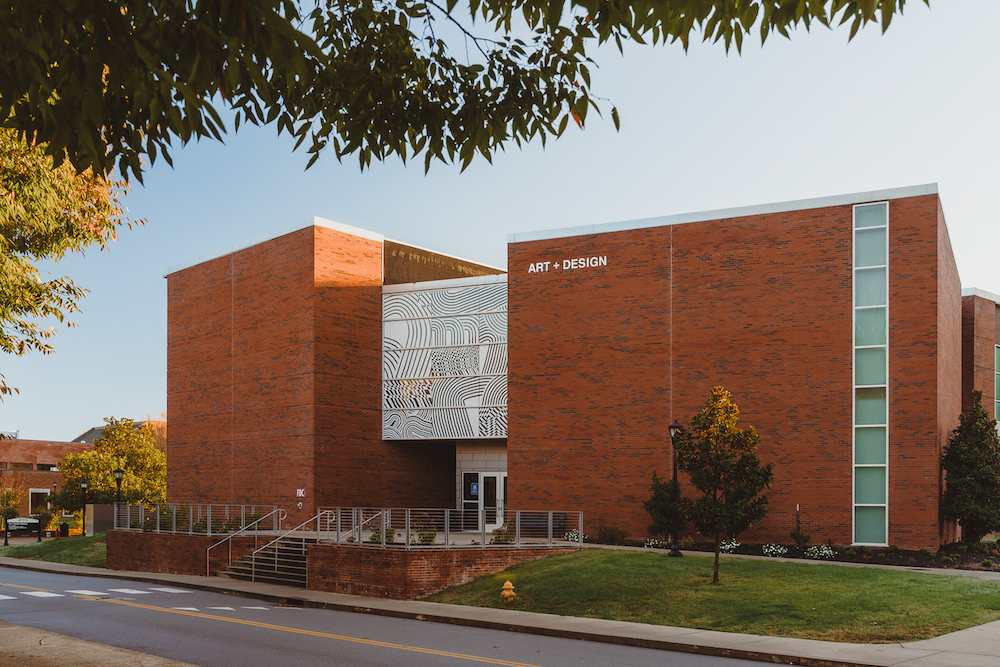
Featuring work by artist Taro Takizawa, this hand-cut vinyl installation combines artistic design and scientific knowledge to aid in wild bird conservation. | Photo by Ralph Acosta
The project has already inspired solutions beyond data collection. The Art + Design Building now features artwork on a large conference room window that serves both aesthetic and practical purposes, completely eliminating bird strikes at that location since installation.
"To me, that was just an obvious win-win," Woltmann said. "If we could expand to have more art like that on campus, I'd love to do it."
For the students, the research experience provides hands-on learning opportunities typically reserved for graduate students at larger universities.
"I realized that there's a lot of value placed in the research here," said junior Preston Thurman. "They have professors that actually want to build and create a better future for others."
The Bird Alliance students are learning that even "negative" data鈥攚hen they find no bird strikes鈥攔epresents valuable scientific information.
鈥淭丑别蝉别 zeros, they sometimes mention, 鈥榦h, 飞别鈥檙别 not finding anything,鈥欌�� Woltmann said. 鈥淥ne, 测辞耻鈥檙别 not finding dead birds. That makes me happy. And two, those zeros are meaningful zeros for a data set like 迟丑颈蝉.鈥�
The students plan to either continue this research at Austin Peay or take their experience with them to their future universities, potentially expanding bird-safe initiatives to campuses across the country. As time goes on, students will come and go from Middle College and the PEER Program, and Schnettler sees the Bird Alliance as a blueprint for recruiting them to get involved with projects outside the classroom.
鈥淭here鈥檚 always a set of [Middle College students] who are just beyond curious about the natural world,鈥� she said. 鈥淭hey want to do more than what they鈥檙e doing in their classes, and you can pick up on that pretty quickly. Our Middle College kids are really great, and every year we end up with these gems鈥攕tudents who want to go further, find answers, and help the community around them. They just have that drive.鈥�
About the Austin Peay College of STEM
The College of Science, Technology, Engineering & Mathematics (STEM) provides studies for students in the areas of agriculture, astronomy, aviation sciences, biology, chemistry, computer science, earth and environmental sciences, engineering physics, engineering technology, information technology, mathematics, medical laboratory sciences, radiologic sciences and physics. Our outstanding, discipline-based programs are student-centered and designed to prepare students for responsible positions at all levels of research, industry, education, medicine and government.